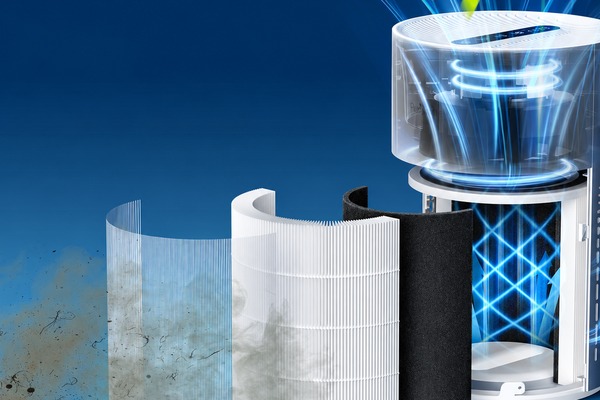
A HEPA filter air purifier helps remove airborne particles such as dust, pollen, pet dander, mould spores. and other pollutants from indoor air. It can capture at least 99.97% of airborne particles measuring 0.3 microns under specified test conditions.
A HEPA filter does not remove every type of indoor pollutant. Gases and many odors require a different filtration method, such as activated carbon. When comparing air purification options, Air Purifier NG is a place to explore air purifiers and learn how to choose a suitable option for your home.
Why Is It Important to Buy a HEPA Filter Air Purifier?
Indoor air can contain particles from cooking, cleaning, pets, outdoor pollution and everyday household activities. A HEPA filter air purifier draws indoor air through a filter and releases filtered air back into the room. When properly sized and used, it can help reduce airborne particles.
Key benefits include:
Reducing airborne dust: A HEPA air purifier can capture airborne particles, although it will not remove dust that has already settled on furniture and floors.
Capturing pollen: HEPA filtration can reduce airborne pollen, a common seasonal allergy trigger.
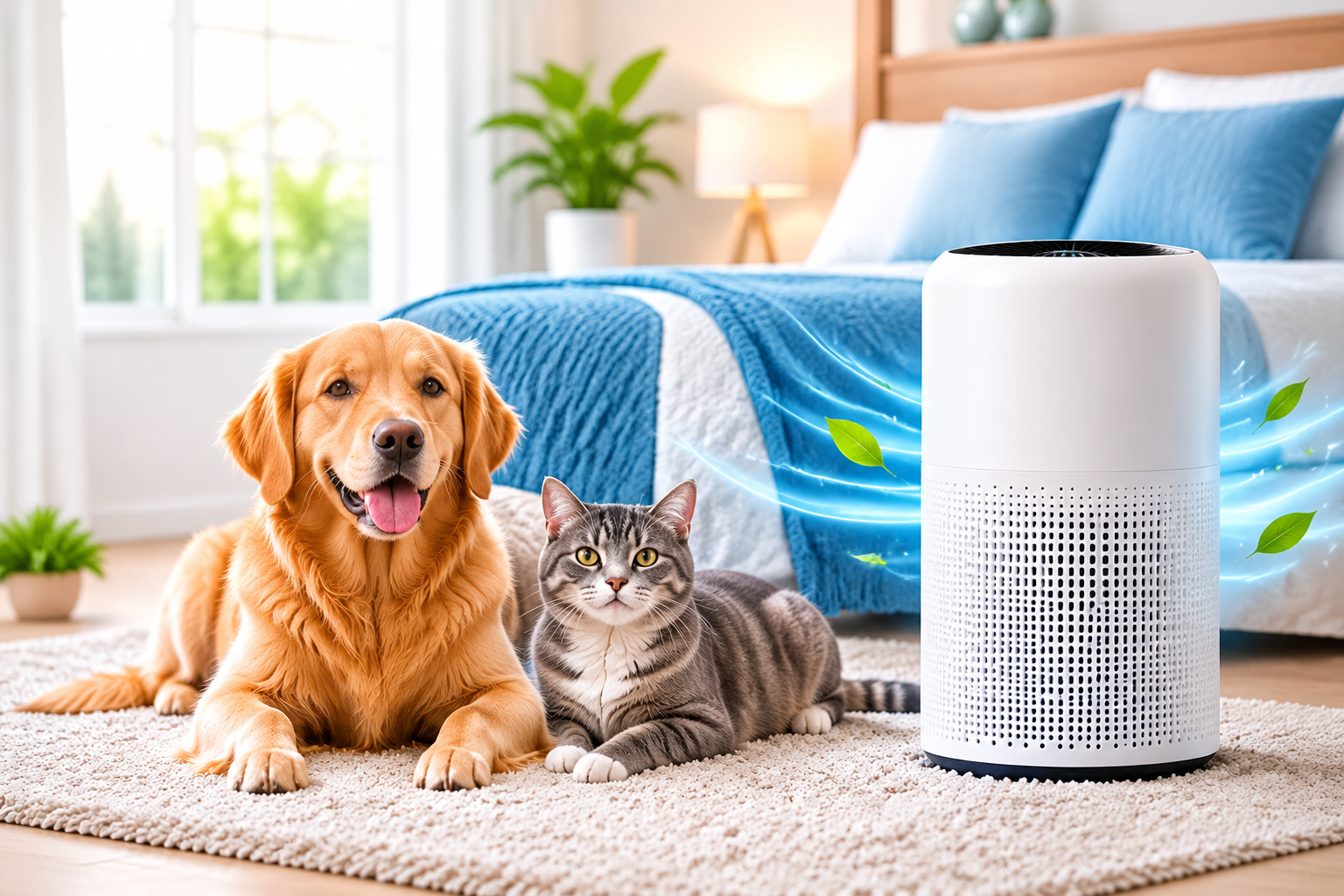
Reducing pet dander: It can capture many airborne particles released by cats and dogs.
Supporting bedroom air quality: A suitably sized purifier can filter airborne particles while you sleep. A quiet sleep mode may be helpful for overnight use.
Reducing some airborne pollution: HEPA filters can capture many fine particles that enter the home from outside.
If you are researching a HEPA filter air purifier in Nigeria, consider your room size, the types of pollutants you want to reduce and the availability of replacement filters before buying.
What Is a True HEPA Air Purifier?
A true HEPA air purifier uses a filter that meets the relevant HEPA filtration performance standard. Product descriptions such as “HEPA-type” or “HEPA-like” do not necessarily mean that the filter meets the same requirements.
Before buying, check the manufacturer’s technical specifications, clean air delivery rate (CADR), recommended room size and replacement-filter availability. These details help you determine whether a model is appropriate for your space.
Is a HEPA Air Purifier With Carbon Better?
A HEPA air purifier with carbon may be a suitable option if you want to reduce airborne particles as well as some cooking or household odours. The effectiveness of carbon filtration depends on the amount and type of carbon used.
When comparing options through Air Purifier NG, look at the specific filtration features listed for each product rather than assuming every purifier removes particles, gases and odours equally well.
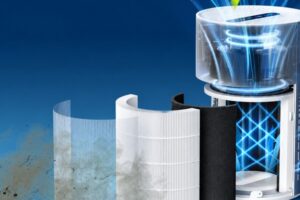
A HEPA filter captures tiny airborne particles, helping improve indoor air quality.
Which HEPA Air Purifier Is Best for Bedrooms, Pets and Allergies?
The best HEPA air purifier depends on your needs and the size of the room.
For bedrooms: Choose a model rated for your room size, with suitable airflow and a quiet sleep setting.
For pets: Look for effective particle filtration and a pre-filter that can catch larger debris and hair.
For allergies: Consider a properly sized purifier that captures airborne particles such as pollen and pet dander.
For asthma: Reducing certain airborne particles may help limit some environmental triggers, but an air purifier does not treat asthma or replace prescribed medication
For mould: HEPA filtration can capture airborne mould spores, but you must also address the moisture source and remove existing mould growth appropriately.
When Should You Replace a HEPA Filter?
Over time, a HEPA filter collects particles and may need to be replaced to maintain effective airflow. Follow the manufacturer’s recommended replacement schedule, as the interval depends on the purifier model, usage and indoor conditions. Some purifiers have replacement indicators.
If you need a HEPA filter replacement, check the exact model of your purifier before ordering. Using a compatible filter helps ensure that it fits and works as intended.
Frequently Asked Questions About HEPA Air Purifiers
Which air purifiers are true HEPA?
Look for products whose manufacturers specify that their filters meet a recognised HEPA performance standard. Check technical documentation and independent product information where available.
Does a HEPA air purifier remove dust?
It can reduce airborne dust particles but cannot remove dust already settled on surfaces. Regular cleaning and vacuuming remain important.
Can a HEPA filter remove pet hair?
HEPA filters primarily capture airborne particles such as pet dander. A pre-filter is generally better suited to catching larger hair and debris.
Can a HEPA air purifier remove mould?
It can capture airborne mould spores that pass through the filter, but it cannot eliminate mould growing on walls or correct the underlying moisture problem.
Does a HEPA filter remove bad smells?
HEPA filters are designed primarily to remove particles. For certain odors, choose a purifier that also includes an activated carbon filter.
Choosing a HEPA Filter Air Purifier
A HEPA filter is an important feature to consider when choosing an air purifier for your home. It can help capture airborne dust, pollen, pet dander, and other fine particles, making it useful for bedrooms and households concerned about airborne allergens.
Before purchasing, check the filter specifications, room coverage, noise level, and replacement-filter availability. To explore air purification options for your home, visitAir Purifier NG.
What Does an Air Purifier Do? Benefits, Dust and Overnight Use
You clean your bedroom, wipe the furniture and change your bedsheets regularly. But when sunlight comes through the window, you may still notice tiny particles floating in the air. You might start wondering: Is the air in my home as clean as it looks, and would an air purifier help?
An air purifier is designed to remove certain pollutants from indoor air. Depending on the model and its filters, it can capture airborne particles such as dust, pollen and smoke particles. Some models also contain activated carbon filters that help reduce certain odours and gases.
If you live in an area where dust, traffic pollution or Harmattan can affect indoor air quality, understanding how an air purifier works can help you decide whether one is right for your home.
In this guide, we explain the benefits of air purifiers, whether they help with dust and smells, and what to know before running one in your bedroom overnight.
What Are the Benefits of Having an Air Purifier?
Dust and airborne particles: Helps capture small particles circulating in indoor air.
Pollen and pet allergens: Can reduce some airborne allergens that may trigger symptoms in sensitive people.
Smoke particles: A suitable particle filter can capture fine particles from smoke.
Certain household odours: Models with suitable activated carbon filters may reduce some unwanted smells.
Indoor air quality: Provides an additional way to manage airborne particles in bedrooms, living rooms and other frequently used spaces.
For people who are sensitive to airborne allergens, reducing exposure may help relieve some symptoms. However, results vary, and an air purifier is not a cure for allergies or asthma.
It works best as part of a wider approach to keeping your home clean, controlling pollution sources and maintaining good ventilation where appropriate.
Do Air Purifiers Help With Dust?
Yes, air purifiers can help reduce airborne dust, especially when they use an effective particle filter and are suitable for the size of the room.
However, there is an important difference between dust floating in the air and dust that has already settled on your furniture, floors and shelves.
An air purifier can capture particles that pass through its filters, but it will not pick up dust sitting on your bedside table or remove the need to sweep and clean your home.
This is particularly relevant during Harmattan, when dust can enter homes through windows, doors and other openings.
To manage household dust more effectively, consider combining an air purifier with regular cleaning, keeping windows closed when outdoor dust levels are high, and reducing the amount of dust entering your home.
A model with a suitable HEPA filter can be useful when your main concern is airborne particles. Remember that the purifier’s performance also depends on its airflow, room size and how long it operates.
Do Air Purifiers Help With Smells?
An air purifier can help with certain household smells, but not every model is designed to remove odours.
The type of filter makes a difference. HEPA filters are designed to capture airborne particles, while activated carbon can adsorb certain gases and odourcausing compounds.
If you are trying to reduce cooking smells, smoke odours or some other household smells, look for a model with a suitable gasremoval filter. The amount and quality of activated carbon can affect how well it performs.
It is also important to deal with the source of the smell. For example, emptying a rubbish bin, cleaning a spill or fixing a damp area is usually more effective than relying on an air purifier alone.
An air purifier can support odour control, but it should not replace proper cleaning, ventilation or the removal of the source.
What Are the Benefits of an Air Purifier in the Bedroom?
Your bedroom is one of the places where an air purifier may be useful because you spend several hours there, often with the door and windows closed.
A suitable air purifier can help reduce airborne particles while you rest. This may be particularly helpful if you are concerned about dust, pollen or other airborne allergens in your sleeping area.
Other potential benefits include:
Reducing certain airborne particles in the room.
Helping manage exposure to some allergens.
Supporting a cleaner indoor environment while you sleep.
Allowing you to filter bedroom air without needing to operate the appliance throughout the entire home.
However, cleaner air does not automatically mean better sleep, and an air purifier will not necessarily stop snoring or resolve breathing problems during the night.
When choosing a bedroom air purifier, consider its recommended room size, noise level and energy consumption. A quiet setting may make it more comfortable to use overnight, although it may provide less airflow than a higher fan setting.
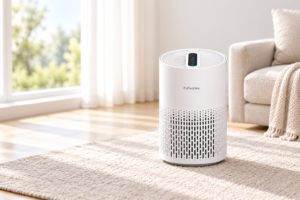
An air purifier with a sleep mode can filter airborne particles overnight while minimizing noise and displaying light.
Is It Okay to Sleep With an Air Purifier on All Night?
Yes, it is generally okay to leave an air purifier running overnight, provided the manufacturer allows continuous operation and you follow the product’s safety instructions.
In fact, running an air purifier for longer periods allows it to process more of the air in the room. This can be useful if your goal is to reduce airborne particles while you sleep.
Before leaving your air purifier on overnight, keep these points in mind:
Choose a quiet setting: A sleep mode or lower fan speed may help minimise noise.
Keep the vents clear: Leave enough space around the air inlet and outlet for proper airflow.
Maintain the filters: Clean or replace filters according to the manufacturer’s instructions.
Check the electrical setup: Use the recommended power supply and avoid damaged cords or overloaded outlets.
Avoid ozonegenerating devices: Choose a purifier that does not intentionally produce ozone as a method of cleaning the air.
One thing to remember is that the quietest setting may not clean the air as quickly as a higher setting. Choose a balance between noise and useful airflow for your room.
If you have a particular model in mind, check its manual to confirm whether it is designed for continuous overnight use.
You need an air purifier if you notice dust or experience an occasional sneeze. However, certain situations may make indoor air filtration worth considering.
You may want to assess your indoor air quality if:
Dust keeps returning: You regularly notice airborne dust even after cleaning.
You live in a dusty environment: Outdoor dust, road traffic or Harmattan may affect the air entering your home.
You have pets: Pet dander can become airborne and may be a concern for people with allergies.
Pollen affects you indoors: An appropriate particle filter may help reduce airborne pollen that enters your home.
Smoke enters your living space: Smoke particles can affect indoor air quality, and a suitable purifier may help reduce them.
You spend long periods indoors: You may want to manage airborne particles in the rooms you use most frequently.
These signs prove that you need an air purifier, and can help you identify whether filtration might be useful.
It is also important not to assume that every indoor air problem can be solved with a purifier. Persistent coughing, sneezing or breathing discomfort can have several causes, so seek medical advice when appropriate.
If you notice a musty smell, visible mould, or persistent dampness, address the moisture problem first. An air purifier cannot fix a leak or prevent mould from growing in a damp area.
What Are the Advantages and Disadvantages of Air Purifiers?
Air purifiers can be useful for managing certain indoor pollutants, but they also have limitations. Understanding both sides can help you decide whether the cost and maintenance are worthwhile.
Advantages
Disadvantages
Can reduce certain airborne particles
Cannot remove dust already settled on surfaces
Suitable filters can help reduce exposure to some allergens
Results depend on the filter, airflow and room size
Activated carbon filters may reduce certain odours
Not every model has effective gas or odour filtration
Can run while you work, rest or sleep
Fan noise may be noticeable
Can improve particle filtration in a selected room
Requires electricity and regular maintenance
Offers an additional way to manage indoor air quality
Replacement filters add to the longterm cost
Another factor to consider is room coverage. A portable air purifier designed for a bedroom may not provide sufficient airflow for a large living room or an entire house.
Before buying, check the recommended room size, clean air delivery rate (CADR), replacementfilter cost and warranty. These details can help you determine whether the appliance suits your needs and budget.
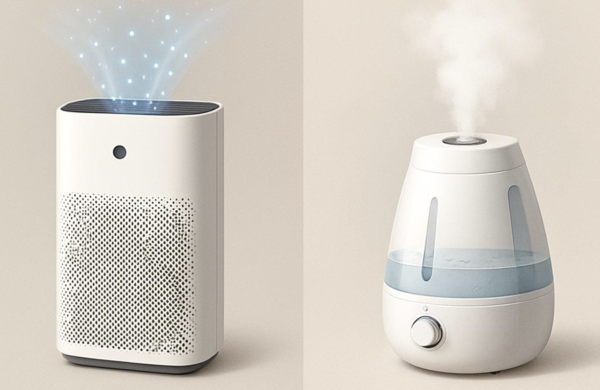
An air purifier helps reduce certain airborne pollutants, while a humidifier adds moisture to indoor air. The right choice depends on your indoor air-quality needs.
Air Purifier vs Humidifier: What Is the Difference?
Although both appliances are used indoors, an air purifier and a humidifier serve different purposes.
An air purifier filters certain pollutants from the air, while a humidifier adds moisture to increase indoor humidity. A dehumidifier does the opposite by removing excess moisture.
Here is a simple comparison:
Appliance
Main purpose
Air purifier
Reduces certain airborne particles or gases, depending on the filters
Humidifier
Adds moisture when indoor air is too dry
Dehumidifier
Removes excess moisture from indoor air
If your main concern is dust, pollen or smoke particles, an air purifier may be more relevant. If the air is uncomfortably dry, a humidifier may be more appropriate.
However, if your home already feels damp or has condensation on walls and windows, adding moisture may make the problem worse. The US Environmental Protection Agency recommends keeping indoor relative humidity below 60%, ideally around 30% to 50%.
A simple hygrometer can help you measure humidity before deciding whether you need a humidifier or dehumidifier.
How Do You Choose the Right Air Purifier for Your Home?
Once you understand what an air purifier does, the next step is finding one that matches your room and your main concern.
Here are five things to check before buying.
Choose the Right Room Size
Check the manufacturer’s recommended room coverage and compare it with the size of your bedroom or living room. A purifier that is too small may not circulate and filter enough air for the space.
Check the Filter Type
If airborne dust and other particles are your main concern, look for a model with documented particlefiltration performance, such as a suitable HEPA filter.
If odours are also a concern, check whether the appliance includes an activated carbon filter designed for gas and odour reduction.
Compare Clean Air Delivery Rate (CADR)
CADR indicates how quickly an air purifier delivers filtered air for specified particle types. Comparing CADR with room size can help you assess how suitable a model is for your space.
Do not rely on a filtration percentage alone. A filter’s stated efficiency does not tell you how quickly the complete appliance will clean the air in your room.
Consider Noise and Electricity Use
If you plan to run your purifier while sleeping, check the noise level at the settings you are likely to use. Also consider its power consumption, especially if you intend to operate it for several hours every day.
Check Filter Replacement and Maintenance Costs
An air purifier needs regular maintenance to perform as intended. Before buying, confirm that replacement filters are available and that their cost fits your budget.
A purifier that is affordable to purchase but difficult or expensive to maintain may not be the most practical long-term choice.
If you are comparing models for your home or office, you can explore air purifier options at AirPurifierNG.Check each model’s specifications, room coverage, and filter requirements to find one that suits your space.
Is an Air Purifier Worth It?
An air purifier can be a useful addition to your home if you want to reduce certain airborne particles, manage exposure to some allergens, or address specific indoor air quality concerns.
It can help with airborne dust, and models with suitable activated carbon filters may reduce certain odors. Many units can also run overnight, provided they are designed for continuous operation and used in accordance with the manufacturer’s instructions.
However, an air purifier is not a substitute for regular cleaning, good ventilation where appropriate, moisture control or medical care when needed.
The best choice depends on what you want to address, the size of your room, the filter system and the ongoing cost of maintenance.
AirPurifierNG sells air purifiers. This article provides general information and does not claim that any product can diagnose, treat or cure a medical condition.